Square vs. Shopify vs. Building It Yourself — The Real Cost Breakdown for 2026
Everyone runs Square vs. Shopify as a two-horse race and forgets the third horse: building it yourself. Here's the real 2026 fee math on all three — and the revenue point where owning beats renting.
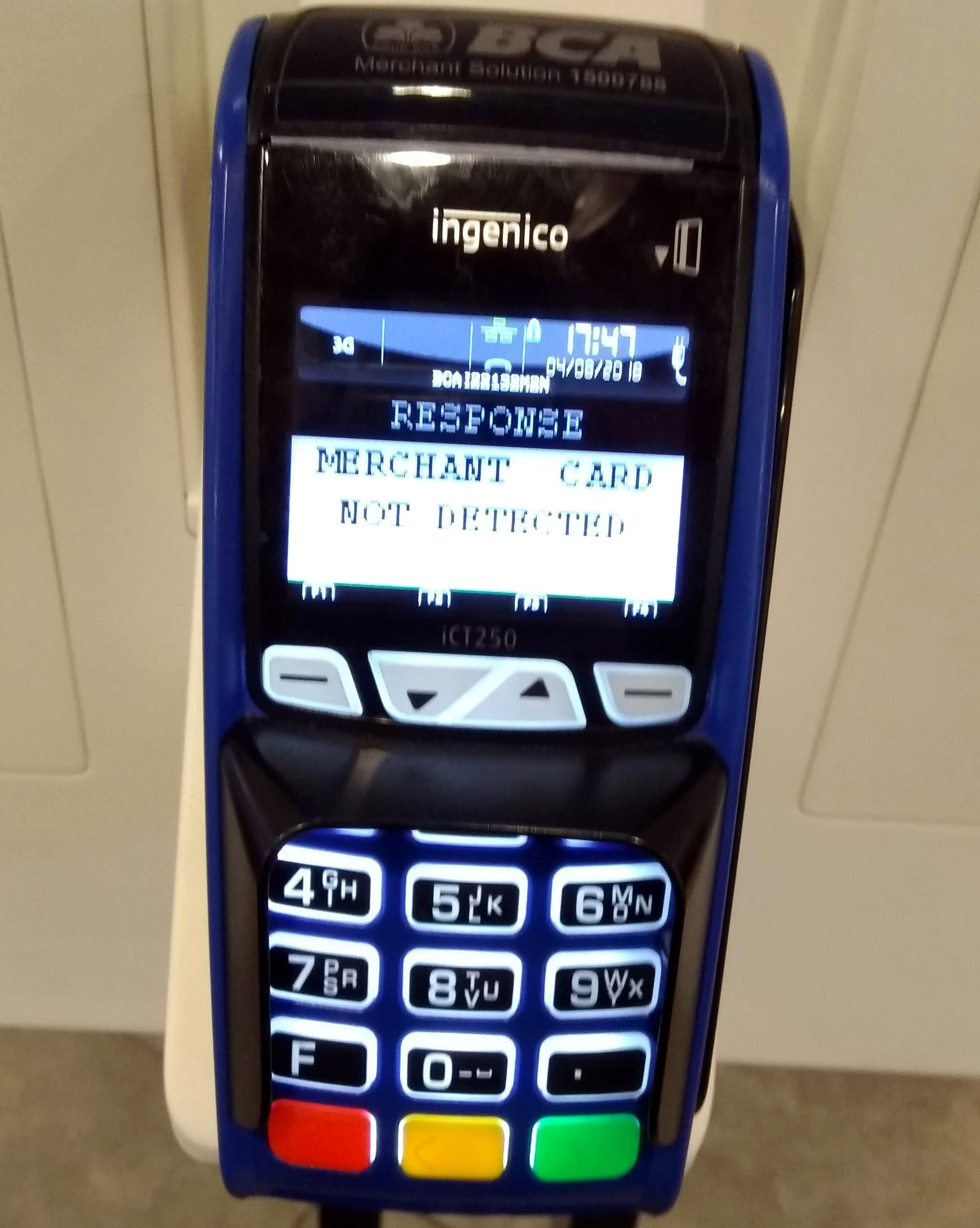
Every option here ends in a card reader. The difference is who takes a cut on the way through. Payment terminal: VulcanSphere / Wikimedia Commons, CC BY 4.0.

Search “Square vs Shopify” and you’ll get ten thousand articles running the same two-horse race, most of them earning an affiliate fee no matter which horse you back.
Here’s what almost none of them tell you: there’s a third horse. You can build your own store and pay neither company a monthly fee. Whether that’s smart depends entirely on math nobody bothers to show you — so let’s show it.
Fair warning: every number below was accurate when I wrote this, but payment pricing changes constantly. Re-check before you commit.
The three contenders, one line each
- Square — swipe-and-go simplicity, built for selling in person first.
- Shopify — a serious online store you can have running tomorrow, for a monthly fee.
- Build it yourself — no platform rent, you own the whole thing, you pay for it once.
Square: cheapest to start, priced for the counter
Square’s pitch is “download it and start taking cards today,” and it delivers. No monthly fee required to begin.
The real cost lives in the per-transaction rates (Square; NerdWallet):
- In person: 2.6% + 15¢ per tap/dip/swipe
- Online: 3.3% + 30¢ on the free plan (2.9% + 30¢ if you’re on a paid tier)
- Manually keyed: 3.5% + 15¢
Paid tiers run $49/month (Plus) and $149/month (Premium), which buy you lower rates and more features — worth it only once your volume is high enough that the rate savings beat the subscription.
One thing worth noting: Square has crept its fees up — the in-person flat fee went from 10¢ to 15¢, and the free-plan online rate jumped to 3.3% (MerchantInsiders). Small per-swipe, real money at volume.
Square wins if: you sell in person — markets, a counter, pop-ups — and you want to start this afternoon with zero commitment.
Shopify: built to sell online, rent included
Shopify is the opposite emphasis: it’s an online store first, and you pay monthly for the privilege.
- Basic plan: $39/month, or $29/month if you pay annually (Shopify)
- Online transactions (Shopify Payments): 2.9% + 30¢
There’s a trap worth circling in red: if you use a third-party payment gateway instead of Shopify Payments, Shopify adds a surcharge of 0.2% to 2.0% on top of your gateway’s own fees (Qualimero). Translation: Shopify really wants you using their payment rails, and penalizes you for not. Factor that in before you assume you can bring your own processor.
Shopify wins if: you want a legitimate, scalable online store running tomorrow, you’ll use its ecosystem, and the monthly fee is noise against your revenue.
Build it yourself: the column nobody computes
Here’s the third horse. A custom store — or even a thoughtfully assembled open-source one — changes the cost shape entirely:
- Monthly platform fee: $0. There’s no Square, no Shopify taking a subscription.
- Payment processing: you connect a processor directly. Stripe’s standard online rate is about 2.9% + 30¢ [VERIFY exact rate at publish] — notice that’s the same per-transaction cut Shopify charges, just without the monthly rent on top.
- Hosting: frequently under $20/month, often less.
- The build: a one-time cost. This is the number the platforms hope you never amortize.
The tradeoff is real and I won’t pretend otherwise: you pay upfront, and you (or whoever you hire) own the maintenance. A platform is zero-maintenance precisely because you’re renting it. But “zero maintenance” has a price, and that price compounds every month forever.
The break-even nobody shows you
This is the whole point of the article, so here’s the actual logic.
Your per-transaction processing rate is roughly the same (~2.9% + 30¢) across Shopify and a self-built store on Stripe. The variable cost is a wash. So the comparison comes down to the fixed cost: a monthly subscription forever, versus a build cost paid once.
A platform at, say, $39–$79/month is $468–$948 every year, indefinitely. Over three years that’s $1,400–$2,800 in pure platform rent — before a single sale. At some volume and time horizon, the rent you’ll pay a platform exceeds what a custom build would have cost amortized over the same period — and at the end of it, the platform renter owns nothing while the builder owns an asset.
The build-it-yourself option doesn’t win for everyone. It wins when:
- Your platform fees + ecosystem add-ons have quietly ballooned past what a build would amortize to.
- You need something the platforms don’t do well — custom workflows, an unusual sales model, deep integration with your other systems.
- Owning your storefront and your customer data outright actually matters to you (it should).
Running that math — “is the rent finally more than the build?” — is exactly the conversation we have with clients at Ctrl Alt Orion. Sometimes the answer is “stay on Shopify, you’re not there yet.” We’ll tell you that too.
The honest verdict
Stop picking by which company has the slicker landing page. Pick by your situation:
- Selling in person, starting now, low volume? → Square. Nothing beats it for fast and cheap-to-start.
- Want a real online store running tomorrow and the monthly fee is rounding error? → Shopify. It’s good at being Shopify.
- Paying serious platform rent, need something custom, or want to own the thing outright? → Build it. Run the break-even; if the rent has outgrown the build, stop renting.
The two-horse race is a marketing frame. The real question isn’t “Square or Shopify” — it’s “rent or own,” and the answer changes as you grow. Do the arithmetic before you sign up for a subscription you’ll be paying in 2029.
Sources
- Square — Pricing (official) — in-person, online, keyed rates; Plus/Premium plans.
- NerdWallet — Square Fees: Calculator and Pricing (2026) — independent confirmation of Square rates.
- MerchantInsiders — Square Fees Explained (2026) — recent fee increases.
- Shopify — Pricing (official) — Basic plan and Shopify Payments rate.
- Qualimero — Shopify Fees 2026 — third-party gateway surcharge (0.2–2.0%).
- commerce-ui — Shopify Pricing (2026) — plan/cost breakdown.
All fees current as of research (2026-06-23) and flagged for re-verification at publish; Stripe DIY rate marked [VERIFY]. Image: VulcanSphere / Wikimedia Commons, CC BY 4.0. Cost-comparison table is an original asset.